My son’s name is Maceo. We named him after Maceo Parker, the legendary saxophonist. At the time, we had no idea there was another Maceo in music history. That discovery came unexpectedly last summer while we were visiting the Blues Museum in New Orleans. My son spotted the name, paused, and said, “Wait… Maceo?” That moment turned into curiosity, and curiosity turned into research.
That’s when we learned about Big Maceo Merriweather. Born Major Merriweather on March 31, 1905, near Newnan, Georgia, he became a giant in blues music. Known for his powerful piano playing and deeply expressive vocals, Big Maceo helped shape the Chicago blues sound in the 1940s. Although his career was cut short due to health issues, his impact never faded. His music influenced generations of blues artists and remains part of the foundation of the genre today.
What started as a name turned into a story, and now it’s part of our family’s story too.
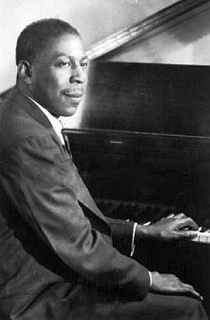
American blues pianist Big Maceo Merriweather
From Georgia Roots to Detroit Nights
Big Maceo Merriweather, born Major Merriweather on March 31, 1905, near Newnan, Georgia, grew up as one of eleven children. His early years were rural and rhythmic, surrounded by the sounds of the South. By the time his family moved to Atlanta in 1920, he was already teaching himself piano, pounding out bass-heavy riffs with his dominant left hand. It was the sound of determination.
When the family joined the Great Migration north to Detroit in 1924, Maceo carried that sound with him. He became a fixture at house parties, rent socials, and smoky clubs — spaces where everyday people found joy, escape, and expression through the blues. Detroit shaped him, but his ambitions eventually called him toward Chicago, the heart of the modern blues explosion.
Chicago, Bluebird, and “Worried Life Blues”
In 1941, Merriweather made his move to Chicago, connecting with legendary guitarist Tampa Red, who introduced him to producer Lester Melrose at Bluebird Records. That meeting led to his first recording session, and history was made.
“Worried Life Blues” became an instant hit, a song soaked in pain, truth, and survival. It would go on to influence generations of blues and rock artists, from Chuck Berry to Eric Clapton. Big Maceo’s thunderous piano style and soul-deep vocals gave shape to the Chicago blues sound that would dominate the 1940s and beyond.
Discovering a Legacy: Through My Son’s Eyes
Months after that trip to New Orleans, we visited the National Blues Museum in St. Louis. I challenged my kids to each find two artists they’d never heard of. My son came back, eyes wide, holding a brochure: “Look, it’s Big Maceo!”
That moment reminded me how history isn’t just something you read about , it’s something you feel when a song, a name, or a story resonates. Watching my son connect his own name to a legend from our city’s past made the story of Big Maceo Merriweather feel like it belonged to us, too. It was a full-circle moment — from Newnan to Chicago to our own family.
Style, Struggle, and Sound
Big Maceo’s music was defined by an unmistakable left-hand groove — rolling bass lines that felt like thunder under a summer storm. Songs like “Chicago Breakdown,” “Texas Stomp,” and “Detroit Jump” displayed both raw energy and finesse, bridging southern blues and urban sophistication.
When a stroke in 1946 partially paralyzed him, his right-hand playing diminished, but his spirit did not. With the help of friends like Eddie Boyd and Johnny Jones, he kept recording, proving that the blues isn’t about perfection — it’s about perseverance.
He passed away in 1953 at just 47 years old, leaving behind a body of work that still shakes speakers today. His influence echoes in the hands of pianists like Otis Spann and Little Johnny Jones, and in the soul of every blues lover who’s ever felt a song tell their story.
Honoring Big Maceo’s Memory
It took decades for Big Maceo to receive the recognition he deserved. In 2002, he was inducted into the Blues Hall of Fame, and in 2008, the White Lake Blues Festival raised funds to place a headstone on his once-unmarked grave. Today, his name finally stands where it belongs — etched in stone and carried in sound.
“For me, this story started with my son’s name. But it became a reminder of how our history — Black history — has rhythms that keep finding their way back to us. Big Maceo Merriweather’s music still speaks from behind those piano keys, telling stories of migration, movement, struggle, and resilience. And somehow, his legacy found its way to our family, one museum visit at a time.”
🎶 Listen to Big Maceo’s “Worried Life Blues” here
WORK CITED (APA-style, web-friendly):
“Big Maceo Merriweather.” Wikipedia. Retrieved 2026.[en.wikipedia]
“Black History: Major ‘Big Maceo’ Merriweather.” Chicago Blues Guide. 2024.[chicagobluesguide]
“Big Maceo Merriweather.” MojoHand – Everything Blues.[mojohand]
“Big Maceo Merriweather.” WBSS Media.[wbssmedia]
“Big Maceo Merriweather Facts for Kids.” Kiddle Encyclopedia.[kids.kiddle]
Influence, songs, and style (including “Worried Life Blues”):
“Big Maceo Merriweather and the ‘Worried Life Blues’.” Travalanche. 2024.[travsd.wordpress]
Hall of Fame, headstone, and legacy:
“Experience Blues Music, Then and Now, at the National Blues Museum.” Explore St. Louis. 2025.[explorestlouis]
“National Blues Museum in St. Louis.” Atlas Obscura. 2024.[atlasobscura]
