Louis Armstrong: 20 Facts You Probably Didn’t Know
Louis Armstrong is one of the most recognizable figures in American music. His gravelly voice, trumpet brilliance, and joyful presence made him a global icon. But behind the smile and the songs was a man whose influence reshaped music forever.
Living in Chicago, it’s hard not to feel Armstrong’s legacy. From Bronzeville to the South Side, his story is woven into the city’s cultural history. And while many people think they know Satchmo, there’s a lot they don’t.
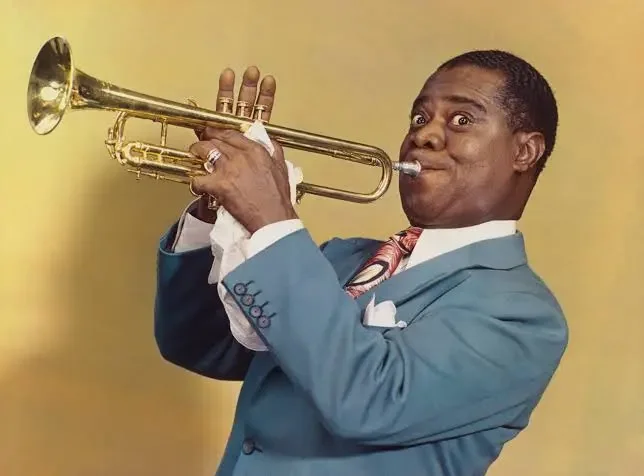
Photograph by Harry Warnecke and Gus Schoenbaechle, 1947
Here are 20 fascinating facts that reveal the complexity, brilliance, and humanity of Louis Armstrong.
1. His real birthdate was August 4, 1901
For years, Armstrong believed he was born on July 4, 1900. Documents later confirmed his actual birthdate was August 4, 1901, in New Orleans.
2. He grew up in extreme poverty
Armstrong was raised in one of New Orleans’ poorest neighborhoods and left school early to help support his family.
3. He learned music at a reform school
After a childhood arrest, Armstrong was sent to the Colored Waif’s Home for Boys, where he learned to play the cornet and received formal musical training.
4. He got his first cornet at age 11
That instrument changed everything. Music became his way out and eventually his legacy.
5. Chicago changed his life
Armstrong arrived in Chicago in 1922 to join King Oliver’s Creole Jazz Band, a move that launched him into national fame.
6. His second wife helped shape his career
Lil Hardin Armstrong, a pianist and composer, pushed him to step out as a solo artist and develop his own sound.
7. He reinvented jazz soloing
Before Armstrong, jazz focused on collective playing. He shifted the spotlight to the soloist, changing music forever.
8. He laid the foundation for swing
Armstrong’s rhythmic phrasing helped define swing, influencing jazz, pop, and rock musicians for generations.
9. His trumpet was so loud that early engineers had to adjust
In early recording studios, Armstrong sometimes stood 15 feet away from other musicians so his sound wouldn’t overpower them.
10. He popularized scat singing
His playful, improvised vocal style became a defining feature of jazz and popular music.
11. He expanded the trumpet’s range
Armstrong pushed the instrument into higher registers than most players dared attempt.
12. He wore a Star of David
Armstrong often wore a Star of David necklace to honor the Karnofsky family, a Jewish family who supported him as a child.
13. He performed constantly
Even into the 1960s, Armstrong performed up to 300 nights a year, despite declining health.
14. He dethroned The Beatles
In 1964, his recording of “Hello, Dolly!” knocked The Beatles off the top of the charts during peak Beatlemania.
15. He toured during the Cold War
Armstrong traveled internationally, including to Communist countries, becoming an unofficial cultural ambassador for the U.S.
16. He boycotted Louisiana
In 1956, Armstrong refused to perform in Louisiana due to segregation laws, a quiet but powerful act of protest.
17. He was a prolific letter writer
Armstrong wrote thousands of letters, many of which historians now use to better understand his personal life and views.
18. He openly used marijuana
Armstrong referred to marijuana as “gage” and believed it helped him relax. He was candid about this long before it was socially acceptable.
19. He reshaped popular songs
Rather than simply sing melodies, Armstrong reinterpreted songs, bending phrasing and rhythm to make them his own.
20. Other musicians called him “God”
Among fellow jazz musicians, Armstrong’s skill and influence earned him near-mythic status.
Why Louis Armstrong Still Matters
Louis Armstrong didn’t just play jazz. He defined it. His innovations in rhythm, improvisation, and vocal expression shaped nearly every genre that followed. More than that, his life reflects resilience, creativity, and the power of art to transcend barriers.
Armstrong’s legacy isn’t just musical. It’s cultural. And it still swings.
