The Tulsa Race Massacre: The Destruction of Black Wall Street
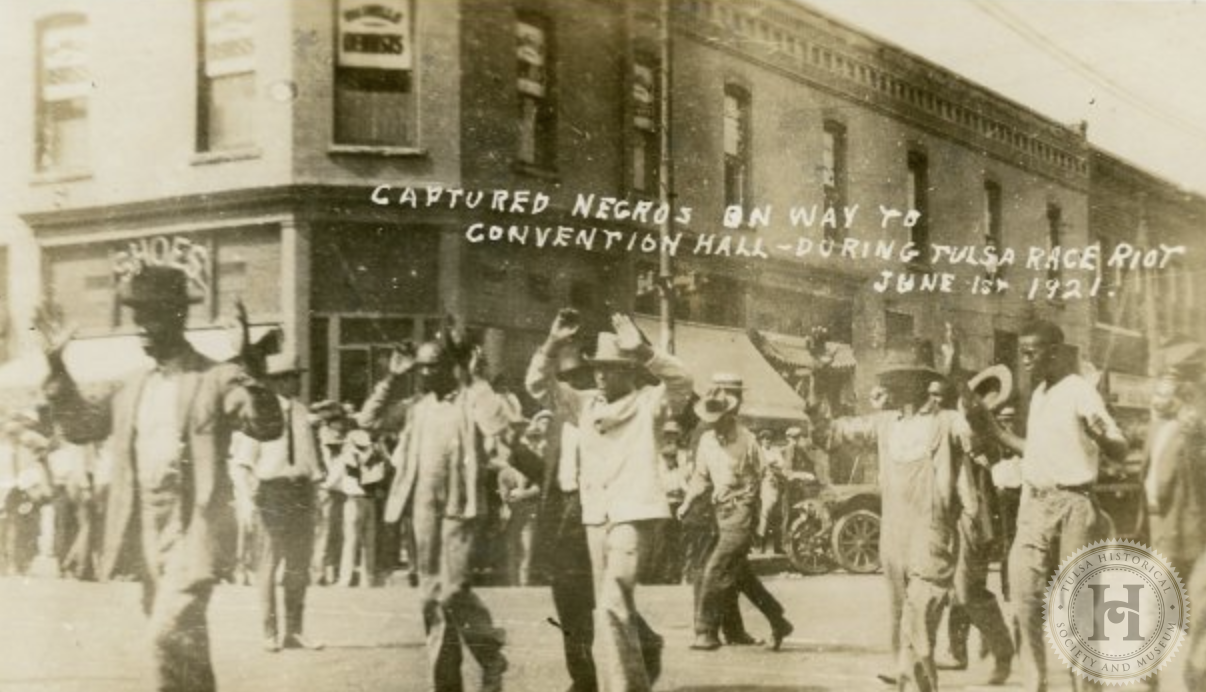
1921 Tulsa Race Massacre - Museum of Tulsa History
The Tulsa Race Massacre destroyed America's richest Black neighborhood in just 18 hours. Over 35 blocks of Greenwood, known as "Black Wall Street", burned to the ground.1Why was this 1921 event missing from history books for 100 years? This K-12-friendly guide shares the facts, myths, and why it matters today.
The Tulsa Race Massacre destroyed America's richest Black neighborhood in just 18 hours. Over 35 blocks of Greenwood, known as "Black Wall Street", burned to the ground.1Why was this 1921 event missing from history books for 100 years?
This K-12-friendly guide shares the facts, myths, and why it matters today.
Greenwood: Black Wall Street Thrived
Before May 31, 1921:
300+ Black-owned businesses: theaters, hotels, doctors, dentists, pharmacies, law offices
Private Black-owned airplane (O.B. Stewart, Tulsa's first Black pilot)
Newspapers, hospital, library, schools
10,000+ residents in a prosperous neighborhood
Myth busted: Booker T. Washington did not coin "Black Wall Street"; local residents did.tulsalibrary+1
Nickname origin: Greenwood's self-made success despite segregation.
What Sparked the Massacre?
May 30, 1921:19-year-old Dick Rowland entered Drexel Building elevator (only restroom open to Black people).17-year-old white operator Sarah Page screamed as doors closed.Rowland tripped, accidentally grabbed her dress (most likely an accident)
May 31:
Clerk sees Rowland running, calls it "assault"
Rowland arrested
Tulsa Tribune headline: inflammatory lynching threat (article later destroyed)
1,500+ armed white mob demands Rowland
Black WWI veterans (25 armed men) arrive to protect him from lynching.Sheriff refuses to hand over Rowland. Shots fired, Black group outnumbered, retreats to Greenwood.
The 18-Hour Destruction (May 31-June 1)
White mob attacks:
Breaks into National Guard armory for guns/ammo (given by officials)
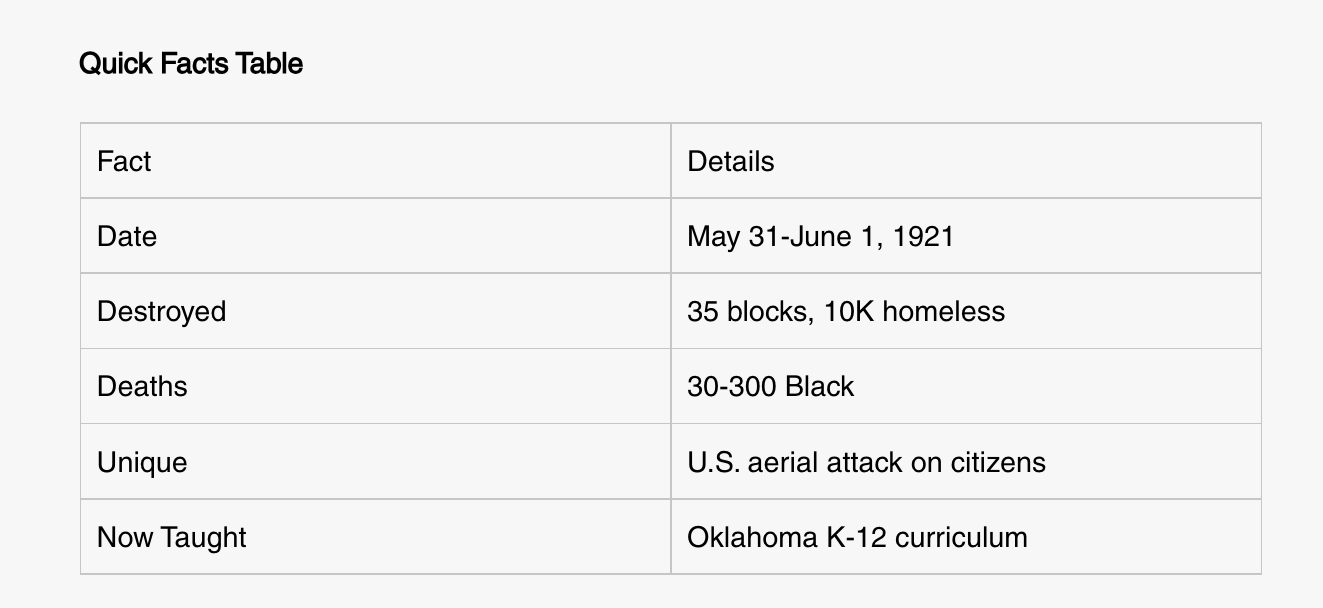
Loots/burns 35 blocks
6 airplanes drop burning turpentine bombs (first U.S. aerial attack on citizens)
Machine guns, shootings
Damage:
1,256 homes destroyed/looted
191 businesses gone
Hospital, school, churches burned
10,000 homeless
Deaths: 30-300 Black people (official lowball); 800+ injured
Martial law: National Guard arrives June 1 noon, detains 6,000 Black residents.okbar+1
![Aerial view of Greenwood burning, courtesy McFarlin Library, University of Tulsa]
Dick Rowland's Fate
September 1921: Case dismissed.Sarah Page's letter: "No desire to prosecute."Rowland fled Tulsa, lived safely in Kansas City until 1960s death. No evidence of assault—likely accident.[2]
The Cover-Up
Immediate aftermath:
No arrests of white attackers
Insurance denied ("riot," not fire)
Documents destroyed
Blame placed on Black residents
100-year silence:
Omitted from textbooks
Called "riot" (implies mutual combat)
"Conspiracy of silence" until 1990s[edweek]
Justice Efforts
1997 Oklahoma Commission:
First official investigation
Confirmed massacre, aerial bombing
Recommended $33M reparations for survivors
No payments made (no legal power)[okhistory]
2020s Progress:
Federal holiday status for Tulsa history
Oklahoma mandates K-12 curriculum (since 2020)[cnn]
Tulsa Public Schools: grade-level lessons
2025 DOJ report: First federal accounting[justice]
Classroom Discussion Questions (K-12)
K-2: What makes a community strong?
3-5: Why do we study hard events?
6-8: How does media shape stories?
9-12: Why reparations debates continue?
Why Tulsa Matters Today
Lesson: Success breeds envy + weak spark = catastrophe.
Takeaway: History textbooks evolve with truth.
Action: Share survivor stories, support Greenwood scholarships.
Tulsa proves Black excellence built America, but hate can destroy overnight.100+ years later, the full story finally gets told.
Sources
Tulsa Historical Society & Museum[tulsaschools]
National Endowment for the Humanities[neh]
Oklahoma Commission Final Report[okhistory]
Britannica[reparationscomm]
