Mae Jemison: The First Black Woman Astronaut and More Than a First
“Never be limited by other people’s limited imaginations. ”
Mae Jemison isn't just the first Black woman in space; she's proof that our kids can dream bigger than the stars and actually get there. As a Black mom raising curious little ones in Chicago, I love sharing stories like hers with Tellers Untold because she shows our babies that brilliance looks like them.
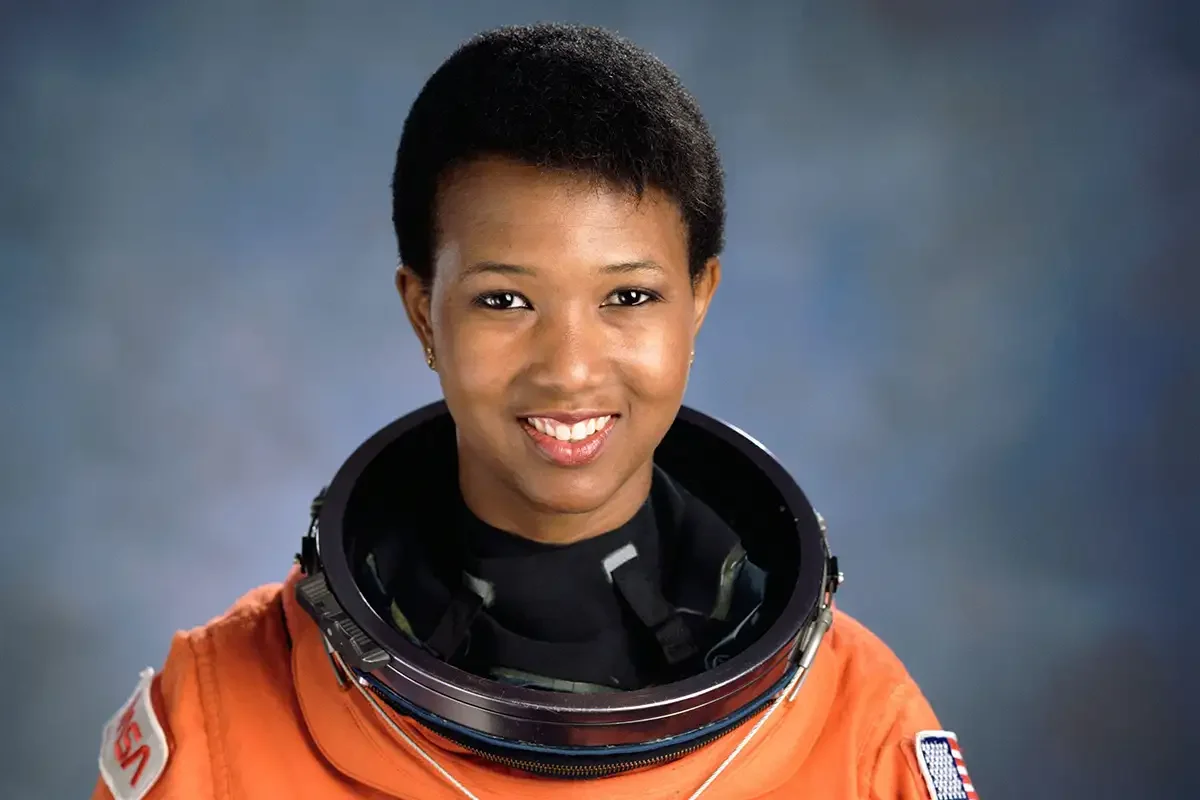
Mae Jemison
From Alabama Roots to Chicago Dreams
Born on October 17, 1956, in Decatur, Alabama, Mae Jemison moved with her family to Chicago when she was three. Her parents believed that better educational opportunities were available and wanted more for their kids. From an early age, Mae showed a deep curiosity about science—by kindergarten, she was reading books on astronomy and imagining herself exploring the stars. A gifted student, she graduated from Morgan Park High School at sixteen and went on to study chemical engineering and African and African American studies at Stanford University.
Stanford Genius at 16, Doctor by 25
A National Achievement Scholar, Mae started at Stanford University at just sixteen, earning degrees in chemical engineering and African and African American studies. She later received her medical degree from Cornell University in 1981. While studying abroad in Cuba, Kenya, and refugee camps in Thailand, she volunteered in clinics and communities, proving that smarts + heart can change the world.
Peace Corps Doctor Before Rockets
Fresh out of medical school, Mae joined the Peace Corps as a medical officer in Sierra Leone and Liberia (1983–1985). She treated diseases like rabies and schistosomiasis and worked with vaccines for illnesses such as Hepatitis B—real hero work in West Africa. Watching Sally Ride’s 1983 flight into space lit her NASA fire and showed her that women could be astronauts too.
First Black Woman Astronaut: 1992 History Made
Mae applied to NASA in 1985 and was selected in 1987 from about 2,000 applicants, in the first group chosen after the Challenger tragedy. She trained as a mission specialist and flew on STS‑47 aboard the Space Shuttle Endeavour on September 12, 1992, spending eight days orbiting Earth. On that mission, she helped conduct 43 experiments on topics like bone loss in microgravity, frog eggs in space, and space sickness. At 36, she floated with pure joy and later said, “I always assumed I’d go into space.”
Life After Orbit: Building Futures
Mae Jemison left NASA in 1993 and briefly taught at Dartmouth College as a professor of environmental studies. She founded The Jemison Group, a technology consulting company focused on using science and innovation to improve everyday life, and later launched BioSentient Corp to develop health‑monitoring devices inspired by her shuttle research. Through the Dorothy Jemison Foundation for Excellence, she created hands‑on STEAM programs like The Earth We Share, an international science camp for students. She also leads the 100 Year Starship initiative, a project seeded by DARPA that aims to make human travel to another star feasible within the next century—roughly by 2112. An author, sought‑after speaker, and lifelong sci‑fi fan, she even guest‑starred on Star Trek: The Next Generation, thrilling sci‑fi‑loving kids who got to see a real astronaut on their favorite show.
Why Mae Matters for Our Kids
Mae Jemison tells Black girls everywhere that engineering + medicine + space = possible. Her story crushes “you can’t” lies, making her perfect for your classroom, youth group, or family talks. Check out our Kid Professors video series for more Black excellence and kid‑friendly stories of trailblazers like Mae.
Mae Jemison’s story reminds us that science, imagination, and representation belong together.
Sources: NASA.gov, Biography.com, Britannica
