Uncovering the Complex Legacy of the Massachusetts Body of Liberties and Black History
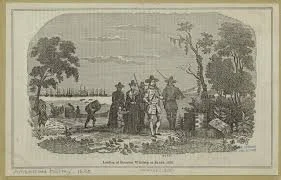
When I recently taught a freshman Black Studies class at a university, we spent time examining a document most students had never heard of: the Massachusetts Body of Liberties.
Adopted in 1641, this document is often described as an early step toward American freedom and individual rights. What rarely gets discussed is its direct connection to slavery, race, and the legal foundations of oppression in New England.
Below are lesser-known facts about the Massachusetts Body of Liberties and its complicated role in Black history, slavery, and the development of American law.
20 Lesser-Known Facts About the Massachusetts Body of Liberties
It was the first legal code in New England.
The Massachusetts Body of Liberties was the first formal legal framework created by European colonists in the region, influencing future colonial laws.
It legalized slavery in Massachusetts.
Despite its language of freedom, the document made Massachusetts the first English colony in North America to legally permit slavery.
Slavery was hidden under “liberties.
Provisions allowing slavery appeared under the section titled “Liberties of Foreigners and Strangers,” exposing the document’s deep contradictions.
Slavery was justified through war and coercion.
The law permitted the enslavement of people taken in “just wars” or those who were claimed to have sold themselves.
It helped create hereditary, race-based slavery.
This legal framework contributed to the development of chattel slavery that passed from one generation to the next.
Its purpose clashed with its reality.
While the document claimed to protect individual liberties, it simultaneously denied freedom to enslaved people.
Slavery laws were repeatedly revisited.
For more than 150 years, Massachusetts continually revised and debated slavery within this legal structure.
It influenced other New England colonies.
The Body of Liberties helped normalize legalized slavery across the region.
Massachusetts never created a full slave code.
Unlike Southern colonies, Massachusetts lacked a comprehensive slave code, creating legal gray areas.
Those legal gaps mattered.
Ambiguities in the law sometimes allowed enslaved people to challenge their status.
Enslaved people could access the courts.
This was rare in colonial America and became a critical tool in freedom lawsuits.
Freedom suits increased after 1760.
More enslaved individuals successfully sued for their freedom as legal challenges grew.
The Black population shifted after the Revolution.
By the end of the American Revolution, Massachusetts had more free Black residents than enslaved ones.
It paved the way for abolition in Massachusetts.
In 1783, slavery was abolished in the state, earlier than in many others.
Its legacy is deeply contradictory.
The same document that legalized slavery also provided language later used to dismantle it.
Enslaved people used their language against the system.
Petitions for freedom often echoed the document’s own language about liberty and rights.
It revealed colonial hypocrisy.
Promoting freedom while enforcing bondage reflected the moral contradictions of early America.
It helped justify the transatlantic slave trade.
Massachusetts’ participation in the Middle Passage was legally reinforced by this framework.
It shaped racial control beyond slavery.
The law influenced restrictions on the movement and behavior of both enslaved and free Black people.
Its effects lasted long after abolition.
The racial hierarchies embedded in this early law continued to shape race relations for generations.
Religion, the Bible, and the Body of Liberties
The Massachusetts Body of Liberties was heavily influenced by Puritan Christianity.
Biblical Influence
Capital crimes were modeled after the Ten Commandments
Many “liberties” were explicitly justified through Scripture
Slavery was defended using selective interpretations of the New Testament
Church Liberties
The document granted churches:
Full authority over worship and doctrine
Freedom to ordain leaders and govern membership
Independence from civil interference in religious matters
Church and Civil Authority
While churches were largely autonomous, civil authorities retained power to:
Enforce public order
Address civil justice involving church members
Prevent religious discipline from removing civil authority
This blending of religion and law laid early groundwork for debates about religious freedom and church–state separation.
A Personal Reflection
As a Black American and a Christian, I find it deeply disturbing that the Bible, a sacred text rooted in justice and liberation, was manipulated to justify the enslavement of my ancestors.
Scriptures that speak of dignity, freedom, and care for the oppressed were twisted to uphold racial violence and exploitation. This history forces us to confront how faith can be weaponized when stripped of context and compassion.
It also challenges us to reclaim the true message of the Gospel, one grounded in equality, accountability, and justice.
Why This History Still Matters
The Massachusetts Body of Liberties reminds us that American freedom was never equally applied. Legal systems that claim liberty can still produce oppression when power determines whose humanity counts.
Understanding this document helps us better understand the foundations of racial inequality, the misuse of religion, and the long struggle for justice that continues today.
Sources & Further Reading
Boston Slavery Exhibit – City of Boston
National Park Service: Slavery and Law in Early Massachusetts
Massachusetts Government Archives
Harvard Legacy of Slavery Report
Boston Public Library
Teaching American History
