Unknown Facts About W. E. B. Du Bois You Probably Didn’t Know
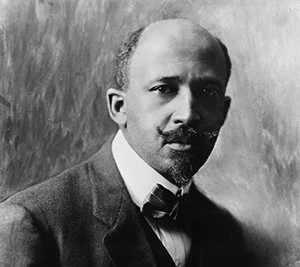
W.E.B Du Bois
Born: February 23, 1868 – Great Barrington, Massachusetts
Died: August 27, 1963 – Accra, Ghana
W. E. B. Du Bois is best known as a foundational sociologist, civil rights activist, and co-founder of the NAACP. Yet, even seasoned readers may encounter surprising, lesser-known facets of his life and work. In this post, we uncover unknown or rarely discussed facts about Du Bois—from his early influences and unconventional academic path to his enduring legacy in Black thought and global human rights.
1) A child prodigy who swapped a formal education for a life of independent study
- While Du Bois later became a towering scholarly figure, his early years were marked by a restless curiosity that didn’t fit neatly into the classroom.
- He excelled academically in public schools but also embraced self-guided exploration, reading voraciously, and seeking out knowledge beyond the standard curriculum.
- This pattern foreshadowed his lifelong commitment to rigorous, self-directed inquiry and to the idea that Black intellectuals could shape the widest fields of knowledge.
2) The “Double Consciousness” concept predated the famous essay
- Du Bois is famous for coining “double consciousness” in The Souls of Black Folk (1903), describing the internal conflict Black Americans feel between their African heritage and American citizenship.
- Lesser-known is that he developed related ideas earlier in his scholarly career, integrating them into his broader critique of social structure and identity.
- Practical takeaway: double consciousness informed later theories of social psychology, identity formation, and intersectionality before those terms were widely used.
3) A lifelong traveler and transatlantic intellectual
- Du Bois spent substantial time abroad, especially in Europe, the Caribbean, and Africa, challenging the notion that his influence was purely domestic.
- His time in Ghana, Egypt, and other countries helped him connect Pan-Africanism with global anti-colonial movements, long before many U.S. civil rights leaders engaged with international diplomacy.
- Unknown fact: He spoke multiple languages in academic and diplomatic circles and used his international platform to advocate for decolonization and global Black solidarity.
4) An early reformer of sociology with controversial methods—some call them radical for his time
- As one of the early founders of sociology in the United States, Du Bois employed rigorous fieldwork, statistics, and qualitative methods to study race and society.
- He was willing to critique the political center-left and the academic establishment when they failed to address systemic racism—sometimes causing friction with contemporaries who preferred more incremental reform.
- Lesser-known: his methodological pluralism anticipated mixed-methods research decades before it became mainstream.
5) The hidden architect of data-driven advocacy
- Du Bois pioneered data visualization in social science, long before data journalism became common.
- His famous Philadelphia Negro study (1899) used systematic observation, surveys, and statistical mapping to reveal the social conditions of Black residents in Philadelphia, challenging prevalent stereotypes.
- He produced compelling visuals and maps that translated complex data into accessible narratives, a practice now standard in public sociology and policy research.
6) A scholar who didn’t limit himself to one discipline
- While widely recognized as a sociologist and historian, Du Bois contributed to literature, anthropology, education, politics, and philosophy.
- He wrote poetry, edited journals, and proposed broad, interdisciplinary frameworks for understanding race, culture, and power.
- This multidisciplinary approach broadened the appeal and impact of his work, inspiring later scholars to cross traditional academic boundaries.
7) Du Bois’s stance on education: universal literacy vs. culturally responsive curricula
- He championed higher education for Black Americans and believed education was essential to empowerment.
- Yet he also argued for curricula that connected Black history and culture to broader humanistic knowledge, advocating for responsive, inclusive education that contextualized Black experiences within global history.
- Unknown fact: he supported coeducation and progressive school reforms that aligned with democratic ideals, not just technical or vocational training.
8) A public figure who didn’t always align with the mainstream civil rights movement
- Du Bois was one of the oldest-generation leaders and sometimes clashed with younger activists on strategy and tactics.
- In his later years, he criticized mass protest strategies in favor of principled, long-term advocacy and international diplomacy.
- This nuanced stance highlights how civil rights leadership evolved and why multiple approaches can coexist within a broad liberation movement.
9) The controversial exile and the “Du Bois paradox.”
- In his later life, Du Bois faced state scrutiny during McCarthy-era politics due to his outspoken views and transnational connections.
- He spent periods outside the United States, including a controversial, self-imposed exile in the Caribbean, imagining a global home for radical Black thought.
- This period underscores the tension between national security concerns and intellectual freedom in American history.
10) Du Bois’s architectural footprint: influence beyond academia
- His ideas influenced urban planning, social policy, and think tanks that examined race, class, and urban life.
- He inspired generations of scholars to ask how cities shape human interaction, what data can reveal about social health, and how intellectuals can translate research into social change.
- Unknown fact: his work helped lay the groundwork for later civil rights research institutions and think tanks that integrated data analysis with advocacy.
Conclusion
W. E. B. Du Bois’s legacy extends far beyond the best-known milestones. He was a relentless seeker of truth whose methods, travels, and cross-disciplinary curiosity helped redefine how we study race, society, and human rights. By exploring these lesser-known facets, we gain a richer, more nuanced portrait of a thinker whose work continues to illuminate contemporary inquiries into equality, justice, and democracy.
