The Zong Massacre: A Black History Story I Was Never Taught
I talk to my kids about Black history a lot, not just about icons we all recognize, but about events that changed our story in ways we’re still feeling today. As a Black mom, I want them to know our history didn’t just happen around famous names; it happened inside ships, courtrooms, kitchens, and quiet acts of survival.
The Zong Massacre is one of those stories I somehow never heard about until I was grown and doing my own research. When I first read it, I had to stop, breathe, and read it again. It’s not just a “fact” from the past; it’s a reminder of how far people were willing to go to profit from Black lives.1
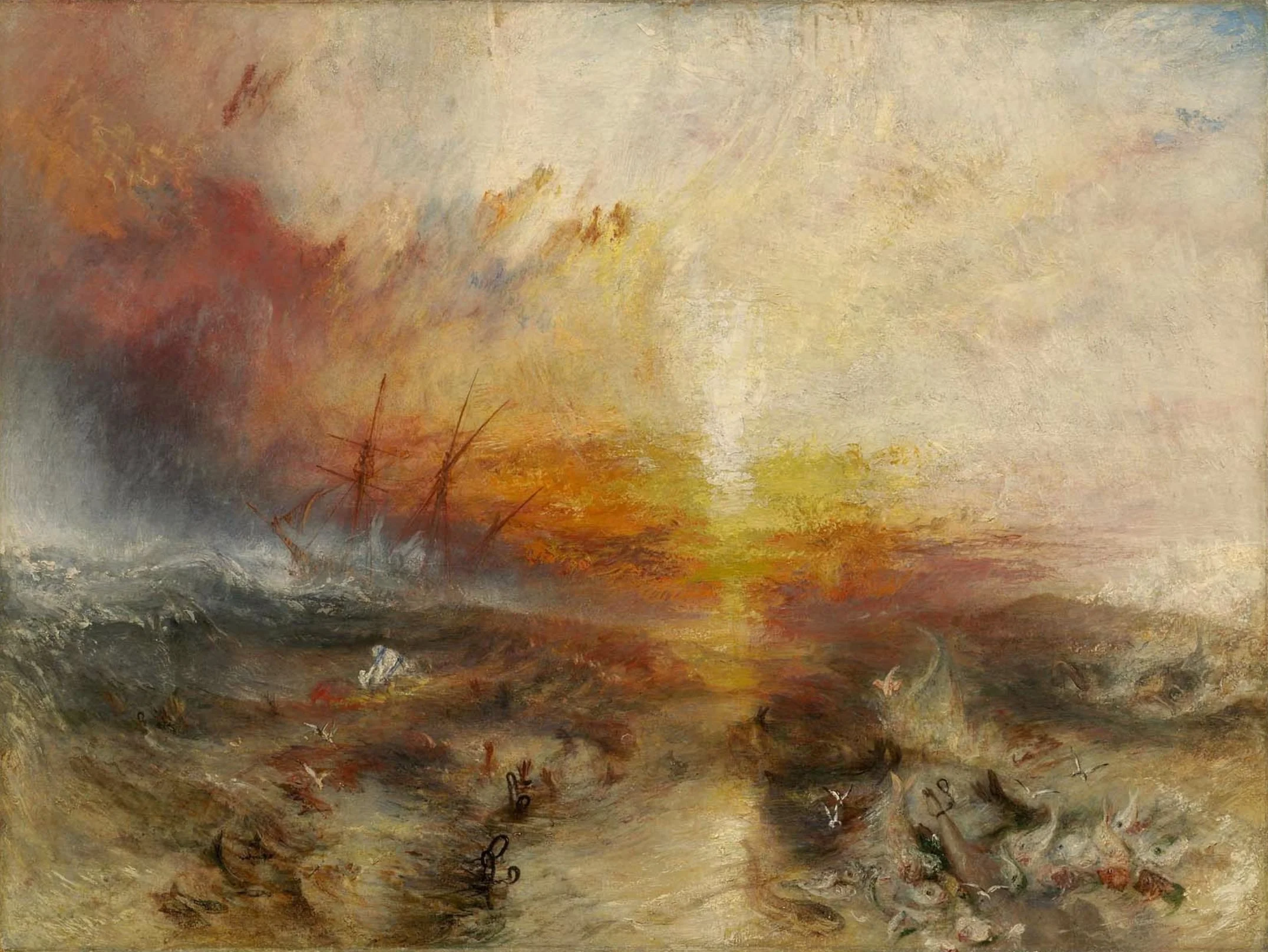
The Slave Ship (1840), J. M. W. Turner's representation of the mass killing of enslaved people, inspired by the Zong killings
In 1781, a British slave ship called the Zong left the west coast of Africa, overcrowded with about 440–470 enslaved Africans, roughly twice the number the ship was designed to carry. The ship was owned by a Liverpool slave-trading syndicate and captained by Luke Collingwood, a former ship’s surgeon.
Conditions on board were brutal. People were packed so tightly below deck that many had less space than a body in a coffin, chained together in pairs with little air and almost no room to move. Disease and malnutrition spread quickly. By the time the ship was partway across the Atlantic, many of the Africans and even some of the crew were sick and weak.
After a series of navigational mistakes, the Zong stayed at sea longer than planned and began to run low on drinking water, at least that was the captain’s claim later. Instead of turning back or rationing what they had fairly, the captain and crew looked at the people on board and saw only “cargo” tied to an insurance policy.
Human Lives Treated as “Damaged Cargo”
Here is where the story goes from horrific to almost unbelievable. The Zong’s owners had insured the enslaved Africans as cargo. If people died from disease or “natural causes” during the voyage, that was considered a business risk, and the owners would not be reimbursed. But if cargo was thrown overboard in an “emergency” to save the ship, they could file an insurance claim and get paid.
So the captain and crew made a calculated decision: they began throwing Africans overboard, alive, into the ocean. Over several days starting around November 29, 1781, they killed more than 130 enslaved people, most accounts say 132 or 133, by drowning them in the sea. Some people, seeing what was coming, jumped overboard themselves rather than wait to be dragged to the rail.
Reading that as a Black parent, I don’t just see numbers. I see mothers, fathers, children, people who loved someone and were loved by someone, reduced on paper to “losses” and “claims.” That’s the kind of violence we’re talking about, turning lives into line items.
A Court Case About Money, Not Murder
When the Zong finally reached Jamaica in December 1781, the ship’s owners filed a claim against their insurers for the value of the Africans they had thrown overboard. This didn’t start as a murder trial. It started as an insurance dispute: Gregson v. Gilbert.
The legal argument hinged on a maritime concept called “general average” or jettison, the idea that cargo can be sacrificed in an emergency to save a ship, with owners then compensated for that loss. The owners argued that the killings were a necessary sacrifice to protect the rest of the “cargo” and crew, and therefore the insurers should pay for each African life lost.
In the first trial in 1783, a jury actually ruled in favor of the shipowners, treating the case as if it were about barrels of goods and not hundreds of human beings. On appeal, new evidence suggested that water may have been mismanaged, rain had fallen before the killings ended, and navigational errors, not an unavoidable “emergency”, put the ship in danger. The appeal judges ordered a new trial, but it was never held. No one was ever criminally prosecuted for the deaths.
For me, that detail hurts: a courtroom spent time debating profits, policies, and procedures, but not one person stood trial for murder.
How the Zong Helped Fuel the Abolition Movement
Even though the courts didn’t deliver justice, the Zong case refused to stay quiet. News of the trial reached Olaudah Equiano, a formerly enslaved African writer and abolitionist, who understood exactly what those deaths meant. He carried the story to Granville Sharp, a prominent British anti-slavery campaigner.
Sharp tried, unsuccessfully, to push for murder charges, writing letters to government officials and raising public awareness. The case was reported in London papers and discussed by abolitionist groups, including Quakers, who began using the Zong as a powerful example of the cruelty and moral bankruptcy of the slave trade.
Over time, the Zong became a symbol for the abolitionist movement in Britain: a chilling example of how slavery turned people into property so completely that their mass killing could be argued about as a business expense. Stories like this helped build public support for ending the trade, contributing to the abolition of the British transatlantic slave trade in 1807 and, later, slavery in most British colonies in 1833.
Why This Story Matters to Me as a Black Mom
What makes the Zong Massacre even more painful is how many of us never heard about it in school. We learn a short line about the Middle Passage, maybe see a diagram of a slave ship, and then we move on. But we aren’t told about this specific ship, this specific captain, or these 130-plus specific lives thrown into the sea for money.
As a Black mom, that silence feels intentional. When we don’t learn these stories, it becomes easier for people to pretend slavery was just “unfortunate” or “in the past,” instead of seeing the calculated systems, the legal structures, and the cold business logic that treated our ancestors as disposable.
Telling this story is not about staying stuck in trauma. It’s about naming what happened so we can honor the people who were lost and teach our children that our history is deeper than any textbook chapter. These weren’t nameless “Africans.” They were human beings whose lives were stolen and then argued over in court like damaged cargo.
Remembering the Zong as Part of Black History
The Zong Massacre is more than a footnote in British legal history; it’s part of Black history, our history. It reveals how far the slave trade went in denying Black humanity and how abolitionists, including formerly enslaved people, used even this horror as fuel to demand change.
When we say Black history is more than names and dates, this is what we mean. It’s about events like this:
A ship overloaded with Black bodies in the name of profit.
A captain who chose insurance money over human life.
A court that talked about pounds and policies instead of justice.
And an abolition movement that said, “The world needs to hear about this,” and refused to let it be buried.
Remembering the Zong is one way we honor the people whose names we’ll never know but whose lives still matter. It’s also a reminder to stay alert to any system—then or now—that tries to put a price tag on our humanity.
Conclusion
When I tell my children this story, I don’t just want them to be shocked. I want them to understand that we come from people who endured the unimaginable, and that we have a responsibility to remember, to speak up, and to make sure no one ever again gets to call our lives “cargo.”
Explore the sidebar on the left. You can add media to add color to your post. You can also change the cover image, optimize the SEO Settings, add categories or tags, and much more. Take some time to explore each tab and discover how you can enhance your future posts.
The Zong case forces us to confront not just the violence of slavery, but the systems that normalized it.
