Jesse Owens: 20 Facts You Probably Didn’t Know
“Find the good. It’s all around you. Find it, showcase it, and you’ll start believing in it. ”
Watch Your Kid Professors where two kids teach you about Jesse Ownens.
Jesse Owens is often remembered for one moment: humiliating Adolf Hitler on the world stage at the 1936 Berlin Olympics. That moment mattered. But it wasn’t the whole story.
Owens’ life reveals the contradiction of America itself: global triumph followed by domestic injustice, historic wins followed by financial struggle, and legacy shaped as much by resilience as by medals.
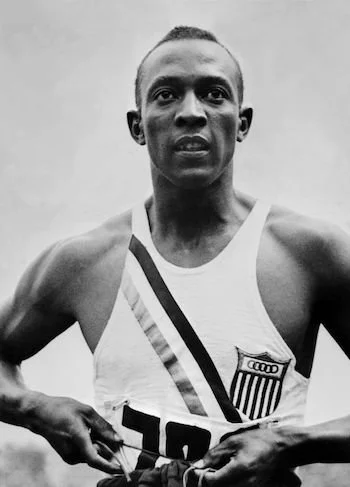
Jesse Owens in the 1936 Olympic Games
Here are 20 important facts that tell the fuller story.
Early Life
1. Jesse Owens was born in Alabama in 1913
He was born James Cleveland Owens on September 12, 1913, in Oakville, Alabama, the youngest of ten children born to sharecroppers.
Explore the sidebar on the left. You can add media to add color to your post. You can also change the cover image, optimize the SEO Settings, add categories or tags, and much more. Spend some time discovering each tab and learn how you can enhance your future posts.
2. He battled serious health issues as a child
Owens suffered from chronic bronchial problems and pneumonia, which makes his later athletic dominance even more remarkable.
3. His family moved north during the Great Migration
At age nine, Owens relocated with his family to Cleveland, Ohio, seeking better opportunities.
4. A teacher changed his life
His track coach noticed his speed and helped nurture his talent, giving Owens structure, discipline, and belief.
5. He earned the nickname “Buckeye Bullet”
Owens’ speed in high school made him a local sensation and earned him a name that followed him into college.
College Career
6. He attended Ohio State University
Owens competed for Ohio State, despite facing segregation that forced him to live off-campus and eat separately from teammates.
7. He worked multiple jobs while competing
Owens balanced school, training, and work, including elevator operator jobs, just to afford tuition.
8. He had the greatest day in track history
On May 25, 1935, Owens set four world records in 45 minutes at the Big Ten Championships, a feat still unmatched.
9. His long jump record stood for 25 years
His jump of 26 feet, 8¼ inches remained the world record until 1960.
Berlin Olympics & Global Impact
10. The 1936 Olympics were political
Nazi Germany used the Berlin Olympics to promote white supremacy and Aryan ideology.
11. Jesse Owens won four gold medals
Owens won gold in the 100m, 200m, long jump, and 4×100 relay, becoming the first American to do so in a single Olympics.
12. His friendship with a German rival mattered
Owens formed a genuine friendship with Luz Long, a German athlete who helped him adjust his long jump technique.
13. Hitler did not publicly congratulate him
Contrary to myth, Hitler did not single Owens out. The real snub came later, back home.
After the Olympics
14. He returned to a segregated America
Despite his victories, Owens was not invited to the White House by President Franklin D. Roosevelt.
15. Fame did not equal financial security
Owens struggled financially and was forced to take exhibition races and odd jobs to support his family.
16. He declared bankruptcy
Like many Black athletes of his era, Owens was denied endorsements and long-term opportunities.
Life After Competition
17. Owens later settled in Chicago
In 1949, he moved to Chicago, started a public relations business, and became a sought-after speaker.
18. He worked with youth and public service
Owens served in multiple civic roles, including work with youth organizations and athletic commissions in Illinois.
19. He held complex views on protest
Despite his own experiences with racism, Owens criticized the 1968 Olympic protest by Tommie Smith and John Carlos, reflecting generational differences in strategy, not a lack of awareness.
Legacy
20. He was finally honored late in life
In 1976, President Gerald Ford awarded Owens the Presidential Medal of Freedom.
Owens died in 1980 from lung cancer at age 66, after years of smoking.
Why Jesse Owens Still Matters
Jesse Owens didn’t just defeat Hitler’s ideology abroad. He exposed America’s hypocrisy at home. His life reminds us that excellence alone does not dismantle injustice, but it can force the world to confront it.
His legacy isn’t just about speed.It’s about truth.
