Sojourner Truth: More Than the Quote We Keep Repeating
“Does not God love colored children as well as white children?”
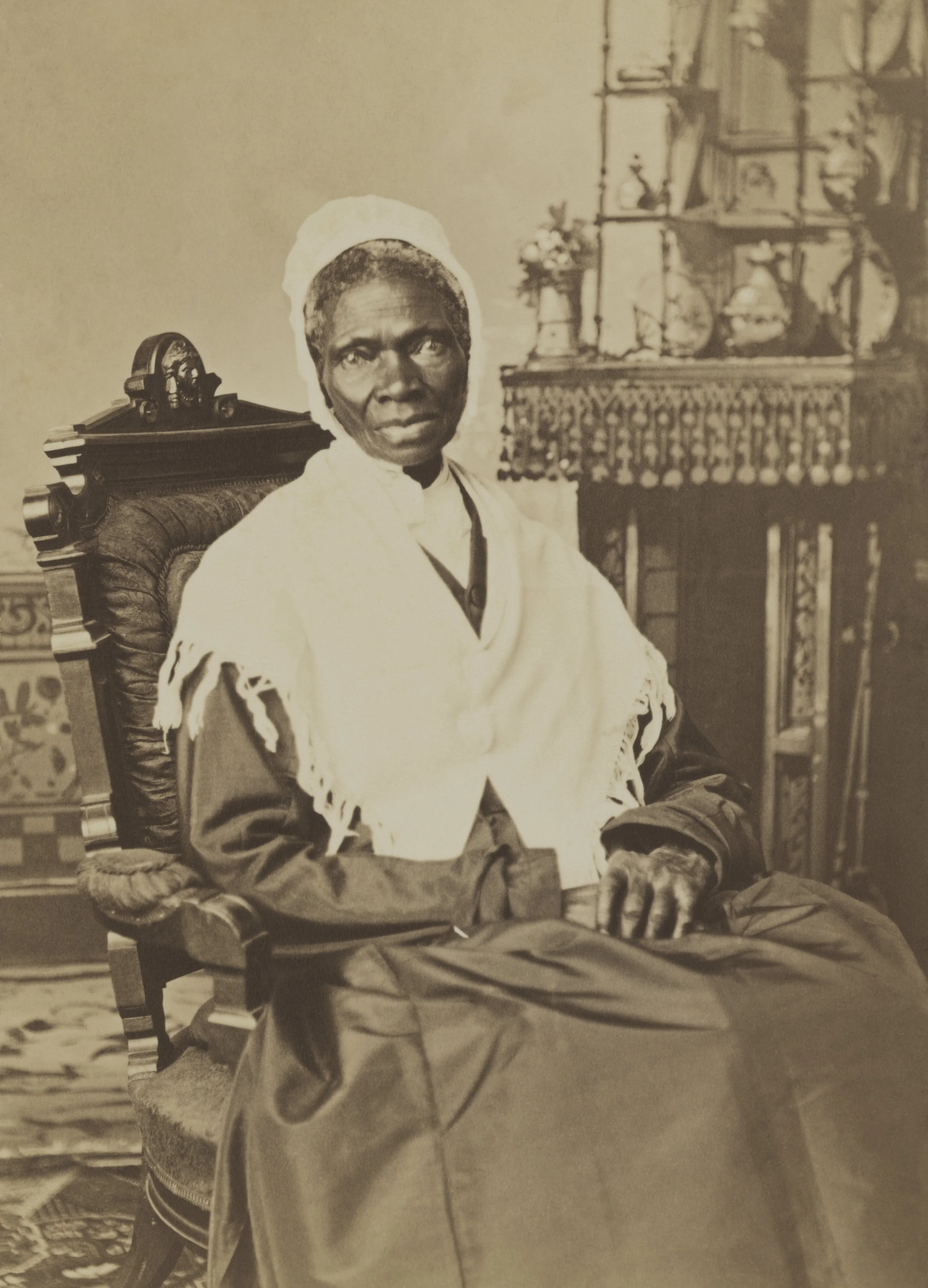
Sojourner Truth, 1870
Who Was Sojourner Truth?
Sojourner Truth is often introduced through a single line. A quote. A moment. A speech title that gets repeated until it loses its weight.
But Sojourner Truth was not a moment. She was a life lived in resistance.
Born into slavery in New York in the late 18th century, she escaped bondage, renamed herself, challenged the legal system, preached across the country, and became one of the most powerful voices for abolition and women’s rights in American history.
And she did all of this without being able to read or write.
Why We Don’t Teach Her in Full
Sojourner Truth is usually remembered for one speech, “Ain’t I a Woman?”What’s rarely taught is how much she endured before she ever stepped onto a stage.
Her story includes violence, loss, faith, strategy, and an unshakable sense of self. When you slow down and look at her life as a whole, she becomes more than a quote. She becomes a blueprint.
Key Facts About Sojourner Truth for Students and Educators
1. She was born into slavery in New York around 1797
Sojourner Truth was born Isabella Baumfree. As a child, she was sold at auction and endured years of abuse. In 1826, she escaped slavery with her infant daughter.
2. She changed her name in 1843
Isabella believed God called her to travel and speak the truth. She renamed herself Sojourner Truth, signaling both her freedom and her purpose.
3. She could not read or write. Truth was illiterate, as many Black women of her generation were. Her autobiography, The Narrative of Sojourner Truth, was dictated to Olive Gilbert and published in 1850.
4. She was both an abolitionist and a women’s rights activist
Truth worked across movements, refusing to separate racial justice from women’s rights. She later helped found the American Equal Rights Association
5. She delivered the speech we still quote today
In 1851, Truth spoke at the Ohio Women’s Rights Convention in Akron. Her speech, later known as “Ain’t I a Woman?”, challenged ideas about race, gender, and power in ways that still resonate.
6. She made legal history. In 1828, Truth became the first Black woman to successfully sue a white man in U.S. court, winning back custody of her son Peter after he was illegally sold.
7. She used photography as activism
Truth sold photographic portraits of herself to fund her work and control her image, making her one of the first Americans to use photography as a political and economic tool.
8. She experienced devastating personal loss
As a young woman, Truth fell in love with an enslaved man named Robert. He was brutally beaten by his enslaver for the relationship and later died from his injuries. The trauma stayed with her for life.
9. She was a preacher. Truth believed deeply in God and traveled as an itinerant preacher. Her faith shaped her belief that all people were equal in God’s eyes.
10. Her legacy extends beyond her lifetime. Sojourner Truth died in 1883. Her life continues to influence movements for justice, faith, and equality. Her question to Frederick Douglass, “Is God dead?”, is engraved on her tombstone.
Why Sojourner Truth Still Matters
Sojourner Truth reminds us that history is not clean or convenient. Her life forces us to confront how race, gender, faith, and power collide.
She wasn’t polished. She wasn’t protected. She wasn’t silent.
And she refused to be simplified.
